
When there is a state government committed to development, it is important that Mumbai has a civic body that, too, shares that goal, Modi said.
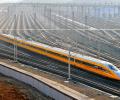
Expresses inability to provide land for train terminal in Bandra-Kurla Complex, a cash cow for MMRDA

An execution paralysis has gripped the city.

Modi said he was shocked that such voices are being raised for political gains in the land of Shivaji Maharaj.
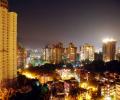
Anuj Puri, chairman and country head at JLL India explains the dynamics of the city's real estate.
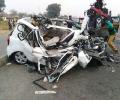
The toughest part is to tackle human behaviour. On the Atal Setu, says Indrajit Gupta, I chose to drive at a consistent speed of 80 kmph in the middle lane. Vehicles on the right lane were clipping along at 150 kmph, way over the maximum permissible limit of 100 kmph. On occasion, I had to slow down or dodge vehicles suddenly pulling into the middle lane from the side.
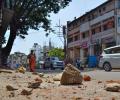
'Hindus have never been polarised across Maharashtra in any state election.'

And learn what not to do from the so far jinxed Navi Mumbai International Airport.

Of the 27 projects being monitored, four to five are critical for Mumbai.

As the BJP is set to form the next government in Maharashtra on Friday, industry experts want the new chief minister to expedite the delayed infrastructure projects in the state and revive investment in key sectors by removing bureaucratic bottlenecks.

Heavy rains lashed Mumbai and its suburbs on Wednesday, causing flooding on roads and rail tracks and disrupting suburban train services as the south-west monsoon arrived in the city with a bang, while the India Meteorological Department (IMD) issued an alert for more downpour.

Mumbai Monorail was to be built in two phases - Phase I of 8.93 km and Phase II of 11.20 km. The first phase ran operations for around three years before services were abruptly halted, owing to a fire incident last year. The second phase now stands completed, but is lying closed.
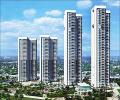
Opt for an affordable house on a metro's periphery, invest and wait it out.
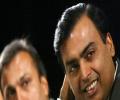
The Ambani brothers, Mukesh and Anil, came together on Thursday to raise the issue of stalled projects plaguing India Inc and implored the Maharashtra government and the Centre to make Mumbai, India's financial capital, an easier place for business and investments. "Several projects are stuck for many years in Mumbai and we would like to know how the government intends to improve the financing and execution of projects, including those relating to infrastructure and education which have been in limbo for long and are affecting the growth of the city," Reliance Industries Ltd (RIL) Chairman Mukesh Ambani told Finance Minister Arun Jaitley. Seated on the same table was his brother, apart from Tata Group Chairman Cyrus Mistry and State Bank of India (SBI) Chairman Arundhati Bhattacharya. Jaitley was addressing the Mumbai Next MMR Transformation conclave, organised by the Maharashtra government and Mumbai First here, through video conference. In his reply, Jaitley said the government was exploring several options of infrastructure financing in India and that a number of international bodies were ready to fund infrastructure development projects. He added the government was keenly considering these funding sources. While praising Maharashtra Chief Minister Devendra Fadnavis for honesty, Jaitley also had a word of advice. Apart from being honest, the government had to be decisive, he said. On his part, Reliance Group Chairman Anil Ambani told the chief minister about his experience of decisions being delayed due to an indecisive bureaucracy and the need to protect officials who wanted to take quick decisions. "Through the past many years, we have faced a number of obstacles in decision-making," he said, adding he was speaking as someone who had lived and invested in Mumbai. Fadnavis responded by saying he would bring about a transparent process to ring-fence officials. Both the Ambani brothers have announced a number of infrastructure projects in and around Mumbai, including a world-class convention centre in Bandra Kurla Complex by RIL, but very few have actually fructified. RIL's special economic zone project failed to take off due to land acquisition problems in Raigarh, while a second SEZ near Mumbai is stuck due to lack of clarity in SEZ norms. The first phase of the Mumbai Metro, set up by Anil Ambani's Reliance Infrastructure, was marred by cost overruns and run-ins with the government over fares. Subsequently, the company withdrew from the second and larger phase, citing inordinate delay. Anil Ambani also withdrew from Mumbai's sea link project on the same grounds. The brothers had also bid for a trans-harbour sea link between Navi Mumbai and Mumbai under the Congress-Nationalist Congress Party government, but their bid was rejected. Reliance Infrastructure is also the power supplier to more than half of this city. Participating in the conclave, some of India Inc's leading bankers said making Mumbai a financial hub would take at least a decade. SBI's Bhattacharya said the Indian currency should be made fully convertible and facilities should be created for it. "However, for this, the economy needs to look up and that will happen only in the next 7-10 years, not immediately," she added. Sunil Kaushal, Chief Executive Officer of Standard Chartered, India, pitched for strong infrastructure to support development. "We will take a long time to develop into a global financial centre. We need to solve transport bottlenecks in Mumbai and have lifestyle facilities for people working in and around these areas," he said.
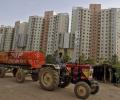
Given the current global cues, if the next six months do not turn out to be the way we would want it to, we are definitely looking at a very gloomy start to 2016.
If money allocations, investment commitments are a sign of better things to come, the state can be optimistic.

Modi also rolled out the first of the 500 metro coaches manufactured by Bharat Earth Movers in flat 75 days at it Bengaluru facility.
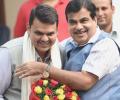
'Four years ago, when Gadkari was BJP president, Fadnavis was president of the state BJP, I had gone on a fast unto death demanding separate statehood for Vidarbha.' 'They had come to meet me and promised that once the party comes to power at the Centre and in the state, we will get separate statehood.' 'Four years have passed, but no change is seen on the ground.'

'While GST and demonetisation are likely to cause disruption for longer than the market currently expects, they can have meaningful positive impact over the medium-term.'
